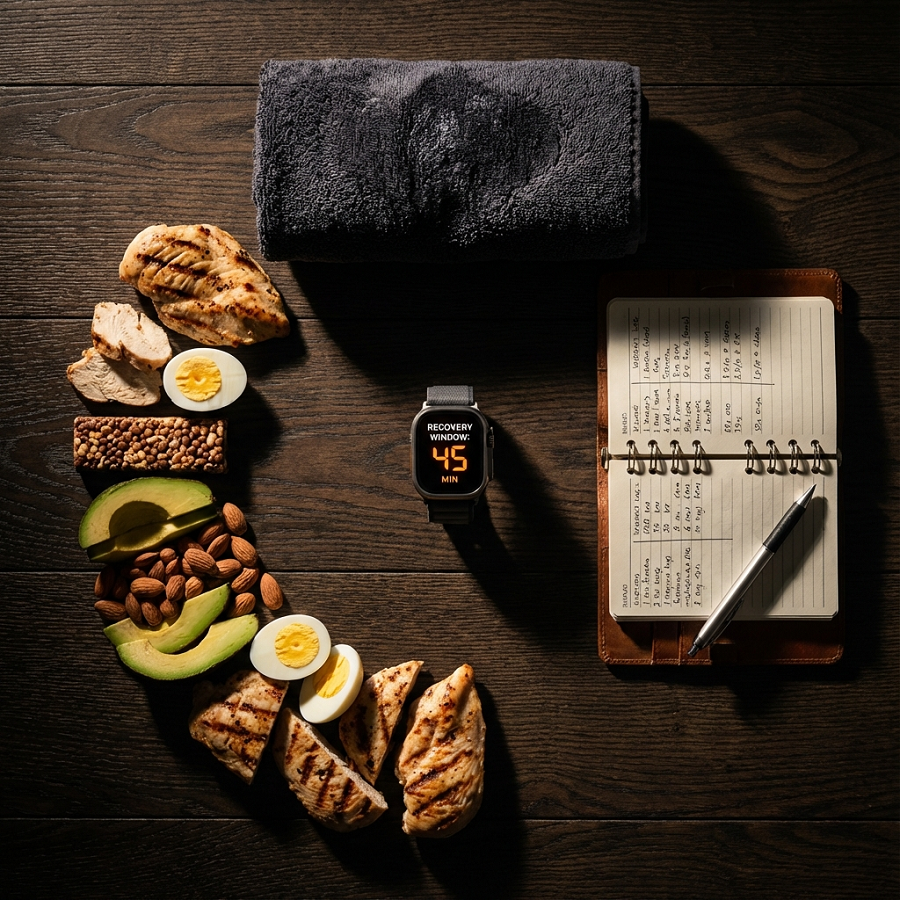
There’s a moment right after a tough workout—when your heartbeat is still echoing in your ears and your muscles flicker between exhaustion and pride—where your body is quietly asking for something. Not a complicated plan. Not a spreadsheet. Just the right fuel at the right time.
And for most people, that fuel is protein.
Not because protein is trendy or because fitness culture shouts about it with megaphone-level enthusiasm, but because your muscles rely on it to repair the microscopic damage you created when you pushed them to their limit. The trick is understanding when to give your body that protein so it can rebuild faster, stronger, and more efficiently—without obsessing over a timer or turning eating into a math equation.
That’s the heart of the Muscle Repair Formula, a practical rhythm for protein timing that fits real life, not the internet version of it.
Let’s walk into it slowly, the same way you cool down after a workout: gently, with intention, giving your brain a moment to settle and open.
Why Protein Timing Holds More Power Than People Realize
There’s a strange thing that happens inside your body when you work out. Your muscles break themselves down on purpose—tiny tears, microscopic disruptions—almost like they’re clearing space for a stronger version of you.
This rebuilding process is called muscle protein synthesis (MPS), and protein is its raw building material.
How MPS Actually Works—Without the Scientific Circus
Think of MPS as a construction crew that shows up the moment your workout ends. These workers arrive ready to patch, rebuild, and reinforce. But there’s a catch—they can only move as fast as the materials you give them. No protein? No progress.
The funny part? Your body is far more responsive to protein at certain times of the day, especially around your workouts. Not in a dramatic, race-the-clock way, but in a gentle, forgiving window where your muscles behave like open doors, ready to absorb and rebuild.
Why Your Body’s “Prime Recovery Time” Is More Flexible Than Fitness Myths Claim
You’ve probably heard the old idea:
“Chug a protein shake within 20 minutes or your gains disappear.”
If that were true, the entire world would be full of people sprinting out of gyms clutching shakers like sacred relics.
Thankfully, your body is much kinder. The “anabolic window” is more like a two-hour opening where your muscles respond beautifully to protein—no panic required.
Amino Acids: The Tiny Signals That Tell Your Muscles It’s Time to Heal
Inside every serving of protein is a cast of characters, but one amino acid—leucine—plays the role of the foreman. It signals your body to begin the repair process with authority.
Get enough leucine, and MPS switches on.
Time it well, and the switch stays on longer.

The Muscle Repair Formula: The Only Timing you Need
Instead of complicated charts or micromanaging every bite, the Muscle Repair Formula comes down to three simple anchors. Think of them as guideposts that remove stress while still giving you everything you need for rapid recovery:
1. Eat protein 1–3 hours before your workout.
2. Eat protein within 2 hours after your workout.
3. Eat protein every 3–4 hours throughout the day.
That’s it. Follow these, and you’re already outperforming 90% of people who train hard but recover slowly.
Let’s ground these anchors in real-world context.
The Pre-Workout Threshold: Fueling Before the Work Even Starts
You know that steady feeling in your body when you’ve eaten something satisfying but not heavy? That’s exactly what your muscles want before you train.
When you eat protein 1–3 hours before your workout, you create a floating pool of amino acids in your bloodstream—available the moment your training stresses your muscles. It’s the equivalent of having building materials already delivered on-site before construction begins.
Easy pre-workout protein ideas:
A bowl of Greek yogurt drizzled with honey
Eggs with oats
A protein shake and a piece of fruit
Tofu or tempeh stir-fry
Chicken and rice
Choose what feels good and keeps your energy balanced.
The Post-Workout Window: Where Timing Feels Like Magic
There’s something almost ritualistic about the meal or shake you have after training. Your body enters a heightened state of receptivity—hungry not for junk, but for nourishment that helps it put itself back together.
You don’t need to hover over a clock. You just need to eat within two hours. Your muscles will take care of the rest.
Shakes are convenient. Whole foods are powerful. A mix of both creates an easy cadence that supports your recovery without demanding attention.
The Spacing Rule: The Secret to All-Day Muscle Repair
Protein doesn’t work best when you dump it all into one giant meal. Your body builds muscle more efficiently when you give it steady, measured servings throughout the day—roughly every 3–4 hours.
Twenty to forty grams per meal is the sweet spot for most people. Enough to stimulate MPS. Not so much that your body treats the excess like wasted opportunity.
When a Shake Makes Sense—and When It Doesn’t
Shakes aren’t superior. They’re convenient. There’s a difference.
Shakes shine when:
You trained fasted
You’re in a rush
You won’t be eating a full meal for a while
You prefer something lighter before a real meal
Whole foods win when:
You want to feel full
You want more balanced macros
You want slower, steadier digestion
You’re aiming for sustained energy
Digestion speed—whey, casein, mixed meals—is simply a matter of how quickly your body gets access to amino acids. All paths lead to recovery; they just take different routes.
A Practical Meal Map for Faster Muscle Repair
Below are human-friendly examples that fit naturally into life.
If your days move fast:
Greek yogurt + honey before training
Whey shake + fruit afterward
Salmon, quinoa, and greens for dinner
If your training volume is high:
Chicken and sweet potatoes pre-workout
Whey isolate after
Cottage cheese or casein before bed
If you’re plant-based:
Tempeh or tofu before training
Pea protein after
Lentils + brown rice + greens at night
Each pattern follows the Muscle Repair Formula without forcing anything.
Factors People Ignore That Quietly Slow Down Recovery
You can get your protein timing perfect and still feel sluggish if these hidden elements are out of alignment.
Hydration
Water is the vehicle that carries amino acids into your cells. No water, no movement.
Training intensity
The harder you train, the more raw material your body needs. High-intensity workouts create more micro-tears, which increases the urgency of protein timing.
Sleep
This is the deepest recovery window your body has.
Protein + sleep = the most overlooked muscle-building combination.
Real Questions People Ask Themselves About Protein Timing
“Do I need protein the second I finish a workout?”
No. A two-hour window is more than enough.
“Is pre-workout protein actually important?”
Extremely. It creates the amino acid wave your muscles draw from during and after training.
“How much protein should I actually eat in a serving?”
Twenty to forty grams is a safe, effective range for most adults.
“Will I still build muscle if my timing isn’t perfect?”
Yes. Timing accelerates the process—it doesn’t define it.
“What’s the fastest protein for recovery?”
Whey is fast, but even whole foods work beautifully when spaced well.
Ready to Recover Faster?
Discover Why the Mediterranean Diet Is the Most Sustainable Path Forward**
If you’re serious about rebuilding stronger, recovering faster, and fueling your body without overthinking every gram of protein, the Mediterranean Diet is the simplest, most evidence-backed way to do it. It pairs naturally high-quality protein sources with anti-inflammatory foods that support muscle repair, gut health, and long-term performance.
It’s not a “diet” — it’s a lifestyle your body instantly recognizes.
Explore how to blend smart protein timing with the world’s most trusted eating pattern and feel the difference in your energy, strength, and recovery.
👉 Check out the Mediterranean Diet now — your muscles (and future self) will thank you.