The short answer: Healthy weight loss for beginners has almost nothing to do with willpower and everything to do with design. Build one habit at a time. Prioritize protein. Cut liquid calories first. Fix your sleep before you fix your diet. And stop trying to become a different person — start becoming a more intentional version of the one you already are.
There’s a particular kind of tired that has nothing to do with sleep.
It’s the tired that comes from trying. From starting over. From knowing exactly what you’re supposed to do and still, somehow, ending up on the couch at 10pm with a bag of chips and that familiar, sinking feeling that maybe you’re just not built for this.
Sarah knew that tired well.
She was 34, teaching third grade in a suburb of Columbus, Ohio, running on three cups of coffee and the quiet conviction that permanent change was something that happened to other people. She’d done keto twice. She’d bought a juicer that now lived under the sink. She’d started a 30-day challenge that lasted eleven days, then deleted the app so she wouldn’t have to see her own streak broken.
The weight wasn’t the worst part. The worst part was the voice that came with it — the one that whispered you already know how this ends.
The photograph changed things. A candid shot from her nephew’s birthday party. She almost scrolled past it. Then she stopped. Not because she looked terrible. Because she looked defeated in a way that scared her — like someone who had quietly given up on something she hadn’t officially let go of yet.
She decided that day to stop waiting until she was “more ready.” She was never going to be more ready. She was going to start instead.
Six months later, 34 lbs were gone. Not through suffering. Not through perfection. Through a system so quiet and so consistent that it almost felt like it happened on its own.
This is that system.
The Real Reason Most Beginners Never Make It Past Week Two
Here’s what nobody tells you at the start: the problem was never the diet. The problem was the approach.
Most people walk into weight loss the same way they’d walk into a burning building — with a burst of adrenaline, a plan held together by sheer determination, and the expectation that passion alone will be enough. It isn’t. Not because they’re weak. Because willpower, as it turns out, is not a personality trait. It’s a resource. And it runs out.
Why Willpower Is the Wrong Tool for This Job
Roy Baumeister’s research at Florida State University spent years documenting what he called ego depletion — the measurable decline in self-control that occurs after a person has already exerted it elsewhere. In plain terms: the same mental muscle you use to sit through a frustrating meeting, manage a difficult conversation, and resist the break room donuts is the same one you’re counting on at 9pm when the chips are calling.
By then, it’s exhausted. Not metaphorically. Biochemically depleted.
This is why you can be disciplined all day and still find yourself elbow-deep in a snack drawer by evening. You didn’t fail. Your strategy failed you — because it was built on a resource that was never going to last.
The people who lose weight and keep it off aren’t more disciplined. They’re better designed. They build systems that require less willpower to operate, not more.
That’s not a motivational reframe. That’s the actual science.
The Behavioral Gap Nobody Talks About
In 2025, almost everyone knows vegetables are better than chips. The information is not the problem. The gap — the real, stubborn, frustrating gap — is between knowing and doing, consistently, when life is chaotic and you’re exhausted and the easier option is always right there.
Dr. BJ Fogg at Stanford has spent his career studying that gap. His conclusion? The solution is never bigger motivation. It’s smaller behavior. The tiniest possible version of a new habit, attached to something you already do automatically, practiced until it stops requiring thought.
It sounds underwhelming. It is also, in nearly every documented case of lasting behavior change, exactly what works.
What Fat Loss Actually Requires (Scientifically Speaking)
Before the tips, the baseline.
Sustainable fat loss requires a caloric deficit — you burn more than you consume. That part is non-negotiable physics. But how you create that deficit matters enormously. A deficit built through starvation is physiologically hostile: cortisol rises, your metabolism adapts downward, hunger hormones intensify, and your body starts cannibalizing muscle for fuel. Your own biology begins working against you.
A deficit built through strategy — through the kind of quiet, compounding adjustments you’re about to read — does the opposite. Hormones stay balanced. Metabolism stays cooperative. Hunger becomes manageable instead of desperate. That’s the zone this system is designed to keep you in, every single day.
Sarah’s Story: What Actually Happened Over Six Months
Note: Sarah is a composite case model built from behavioral weight loss research, clinical outcome data, and real-world beginner experience. Her journey reflects patterns documented across multiple longitudinal studies.
Where She Started
187 lbs. 5’4″. Chronically low energy. A refrigerator full of good intentions and a cabinet full of unopened supplements from previous attempts.
She wasn’t starting from zero. She was starting from negative — from the accumulated weight of past failures and a trust in herself that had been quietly eroding for years.
The Shift That Changed Everything
The change didn’t come from a new diet. It came from a new question.
She stopped asking what should I eat? and started asking who do I want to become? She stopped treating weight loss like a temporary project with a finish line and started treating it like the natural side effect of becoming a different kind of person.
She committed to one change per week. Just one. No food tracking in week one. No gym membership. No overhaul. Just water — eight glasses a day, seven days in a row.
It felt almost embarrassingly small. It also worked. And more importantly, it did something nothing else had ever managed to do: it gave her seven consecutive days of keeping a promise to herself.
That streak became the emotional foundation for everything that followed.
Six Months Later
By month three, she’d lost 14 lbs without ever feeling like she was on a diet. By month six, the number was 34.
But the number wasn’t what she talked about most. What she talked about most was the shift in how she thought about herself. “I didn’t feel like I lost weight,” she said. “I felt like I became someone who just lives this way. Like the old version of me is someone I used to be, not someone I’m fighting against anymore.”
That distinction — from dieter to identity — is the entire architecture of what follows.
The 10 Healthy Weight Loss Tips for Beginners That Built Sarah’s Results
These aren’t generic. They aren’t recycled from a wellness magazine. Each one is anchored in behavioral science, nutritional research, and the lived experience of people who lost weight and actually stayed there. Read them in order — they build on each other deliberately.
Tip 1: Start With One Habit Per Week, Not Ten
The most destructive thing a beginner can do is try to change everything at once on a Monday morning.
It feels committed. It feels like this time is different. And within two weeks, the cognitive weight of managing ten simultaneous behavior changes causes a cascade failure — one slip becomes a shame spiral, the shame spiral becomes abandonment, and the whole thing resets to zero.
Phillippa Lally’s research at University College London found that a single behavior, practiced consistently in a stable context, takes anywhere from 18 to 254 days to become automatic — with an average around 66. Stack ten habits simultaneously and you’re splitting that formation bandwidth ten ways. Every single habit takes longer to stick. Most don’t stick at all.
One habit per week. That’s the rule. Week one: water. Week two: protein at breakfast. Week three: earlier bedtime. Stack them slowly, methodically, and by month three you’ll have twelve automated behaviors running in the background of your life like software — barely requiring conscious thought.
Sarah’s first week was just water. She almost felt guilty about how simple it was. Then she realized she’d kept a commitment to herself for seven days straight — the first time in years. That was not a small thing.
Tip 2: Engineer Your Kitchen Before You Change Your Eating
Your kitchen is not a neutral space. It is an environment that is either quietly working for you or actively working against you — and most people never change it.
Richard Thaler, Nobel laureate in behavioral economics, built his career on a fundamental insight about human behavior: we don’t make rational choices. We make convenient ones. The food you can see is the food you eat. The food within arm’s reach is the food you choose. Your kitchen is constantly making decisions on your behalf — the question is whether those defaults favor your goals or undermine them.
Before changing a single thing you eat, change what’s visible:
- Move ultra-processed snacks off countertops and out of eye-level shelves
- Put fruit, cut vegetables, and protein-rich snacks at the front of the refrigerator
- Pre-portion nuts and healthy snacks into small containers every Sunday
- Put a water bottle on your nightstand, your desk, and your kitchen counter
Brian Wansink’s Cornell research — later replicated with refined methodology — found that people eat 23% more food when it’s visible on the counter. That’s not a willpower failure. That’s environmental design working against you.
Change the design. Change the default. No willpower required.
Tip 3: Liquid Calories Are the Silent Saboteur — Cut Them First
If you do nothing else on this list, do this.
A flavored latte from your favorite coffee chain: 300 calories. A glass of orange juice: 110. A “healthy” commercial smoothie: 350. Two glasses of wine with dinner: 280. Add it up and many people are quietly consuming 500 to 800 calories per day through drinks alone — calories that generate almost zero fullness because liquids bypass the stomach stretch receptors responsible for triggering satiety signals.
Research published in the American Journal of Clinical Nutrition confirmed what nutritionists have observed for decades: when you drink 300 calories, your body doesn’t reduce your appetite by 300 calories. You add them almost invisibly on top of everything else you eat.
Replace caloric beverages with water, black coffee, plain tea, or sparkling water with lemon. Do it for two weeks before changing anything else. Most beginners see a 3 to 7 lb drop in this window — which is motivating in a way that feels almost unfair given how little effort it required.
That’s the point. This is the highest-leverage, lowest-friction change available to you. It doesn’t feel like dieting because you’re not restricting what you eat. You’re just drinking differently.
Tip 4: Build Every Meal Around Protein First
Protein is the most powerful nutritional lever a beginner has access to — for three reasons that compound on each other.
First, it is the most satiating macronutrient per calorie. Second, it carries the highest thermic effect of any food — your body burns significantly more calories digesting protein than it does digesting fat or carbohydrates. Third, during a caloric deficit, adequate protein preserves lean muscle mass, which means you’re losing fat, not destroying the metabolic engine that burns it.
Research published in Obesity Reviews found that higher-protein diets reduce appetite hormones, elevate satiety hormones, and produce greater fat loss than standard-protein diets at identical calorie levels.
The Protein-First Plate Method makes this practical:
- Fill one-third of your plate with a lean protein — chicken, eggs, fish, Greek yogurt, cottage cheese, legumes, tofu
- Fill half the remaining space with non-starchy vegetables
- Use the last section for complex carbohydrates or healthy fats
Eat in that sequence. Research from Weill Cornell shows eating protein and vegetables before carbohydrates reduces post-meal blood sugar spikes by up to 37% — blunting the insulin response that drives fat storage and afternoon energy crashes.
Sarah described this as the moment eating felt different. She stopped being hungry ninety minutes after meals. The 3pm snack drawer raid quietly disappeared.
Tip 5: Walk 7,000–10,000 Steps Before You Think About a Gym
The fitness industry has told beginners that if it doesn’t happen in a gym, it doesn’t count. This is both wrong and expensive.
NEAT — Non-Exercise Activity Thermogenesis — is the energy your body expends through every movement that isn’t structured exercise: walking, taking the stairs, carrying groceries, fidgeting, standing. Dr. James Levine at the Mayo Clinic found that NEAT can account for a difference of up to 2,000 calories per day between two people of similar body composition. Not a small variable. Potentially the largest variable in your total daily energy expenditure.
A sedentary beginner who increases their daily steps from 3,000 to 10,000 can create a 400 to 600 calorie daily deficit — without a gym, without soreness, without scheduling conflicts, without the psychological resistance that comes with “working out.”
Start with 1,000 more steps than your current average. Increase by 500 to 1,000 per week. Add a 15-minute walk after dinner — research shows post-meal walking measurably reduces blood sugar spikes and improves insulin sensitivity.
Don’t add gym work until this habit is fully automatic. The gym will still be there. The compounding effect of daily movement cannot wait.
Tip 6: Sleep Like Fat Loss Depends On It — Because It Does
This is the tip most beginners skim past. It is also, in practice, the one with the most immediate and dramatic impact.
Weight loss is not purely a caloric event. It is a hormonal event. And the primary laboratory where your hormones are regulated, repaired, and calibrated is sleep.
Two nights of restricted sleep increases ghrelin — your hunger hormone — by up to 28%, per UC Berkeley research. Simultaneously, leptin (the hormone that signals fullness) drops by 18%, meaning your brain receives weaker “I’m satisfied” signals throughout the day. Cortisol rises, actively promoting visceral fat storage. Insulin sensitivity decreases, making your body less efficient at processing carbohydrates. Growth hormone — which governs fat metabolism and muscle repair — is secreted primarily during deep sleep and is disrupted by shortened sleep cycles.
A University of Chicago study found that dieters sleeping 8.5 hours per night lost 55% more fat and 60% less muscle than dieters sleeping 5.5 hours — on the identical calorie intake.
You can eat precisely and train consistently. With 5 hours of sleep, you are working against your own biology every single day.
Set a sleep start alarm — not just a wake-up alarm. Keep your room at 65 to 68°F. Remove screens or use blue-light blocking glasses an hour before bed. Build a 20-minute wind-down ritual and protect it like an appointment with someone you can’t cancel on.
Sleep is the most anabolic, fat-burning, hormone-restoring activity available to you. Treat it that way.
Tip 7: Run the “One Percent Better” Daily Audit
Five minutes. End of day. Three questions.
James Clear’s mathematics of marginal gains — improving 1% per day compounds to being 37 times better by year’s end — is compelling in theory. This practice makes it tangible.
Each evening, answer these questions in a journal, a notes app, or a voice memo to yourself:
- What is one thing I did today that moved me closer to my goal?
- What is one thing I’d do differently tomorrow?
- What is one thing I’m genuinely proud of today, related to my health?
This is not a confession booth. It’s not a self-criticism exercise. It’s a signal to your reticular activating system — the part of your brain that filters what you notice and remember — that your health is a priority. Once that signal is sent consistently, your brain unconsciously begins scanning your environment for opportunities to reinforce it.
Sarah called this her sanity tool. On plateau weeks, question two kept her honest. On hard days, question three kept her going. The journal from her six-month journey became one of her most treasured possessions — not because it tracked her weight, but because it documented, page by page, who she was becoming.
Tip 8: Ditch Daily Weigh-Ins — Use a Weekly Average Instead
The scale is simultaneously the most useful and the most psychologically dangerous tool a beginner owns.
Your body weight fluctuates by two to five pounds daily — based on water retention, sodium intake, hormonal cycles, digestion, and glycogen storage — none of which reflect actual fat gain or loss. But when a beginner sees a three-pound increase from yesterday, the brain doesn’t process nuance. It processes failure. And that feeling of failure triggers the “what’s the point” spiral that ends more weight loss journeys than any dietary mistake ever has.
Daily weighing creates what behavioral psychologists recognize as a variable reward schedule — the same mechanism behind slot machines. Unpredictable outcomes are psychologically destabilizing for anyone who lacks the context to interpret them correctly.
Instead: weigh once per week, same day, same time, same conditions — morning, after the bathroom, before eating. Record it. Calculate a four-week rolling average. Measure progress by comparing monthly averages, not individual numbers.
Add non-scale victories to your tracking: energy levels, how your clothes fit, workout performance, sleep quality, mood. The scale tells one story. Your body is telling several.
Tip 9: Build a “Why Wall” — The Anchor That Keeps You from Quitting
Motivation spikes when you start and crashes when difficulty arrives. It is not a reliable fuel. Purpose, on the other hand — a deeply anchored emotional reason that is bigger than aesthetics — is remarkably durable.
Self-determination theory, developed by Deci and Ryan, consistently shows that intrinsic motivation — driven by internal values and identity — produces dramatically more sustainable behavior change than extrinsic motivation driven by appearance or social pressure. Most beginners operate on extrinsic motivation. They want to look better for an event, impress someone, fit into something. When the event passes or the social pressure fades, so does the motivation.
A Why Wall forces you to dig deeper.
On a blank page, a whiteboard, or an actual section of wall, write or pin your answers to:
- Who do I want to become? (identity level)
- What will I be able to do at my goal that I can’t do now? (capability level)
- Who benefits from the healthier version of me? (relational level)
- What am I afraid will happen if I don’t change? (loss aversion level)
Add one image — not a body image, a lifestyle image. Someone hiking a mountain. Running with their kids. Living inside the life they want.
Look at it for 60 seconds every morning before you check your phone.
This is not vision-board mysticism. It’s neurological priming. Sixty seconds of emotional activation in the limbic system before the day’s noise can override it. Small ritual. Outsized effect.
Tip 10: Find Your Accountability Mirror
No one achieves lasting behavior change in complete isolation. Not one person. The research on this is categorical.
A 2019 meta-analysis in the Journal of Consulting and Clinical Psychology reviewed 39 studies on social support and weight loss. Participants with accountability partners or group support lost significantly more weight — and maintained it significantly longer — than those who dieted alone, even on identical plans.
The reason is identity, again. We become who the people around us believe we’re capable of becoming. When someone who knows your goal asks how it’s going, you suddenly care more about the answer. That’s not weakness. That’s how human motivation architecturally works.
Choose one person — not a romantic partner (research suggests this adds counterproductive pressure) — who is either on a similar journey or genuinely invested in your growth. Establish a weekly 10-minute check-in. Share your One Percent Better audit. Text each other Sunday evenings. That’s it.
Sarah’s accountability mirror was her coworker Melissa. They didn’t follow the same diet or train together. They just texted every Sunday: week recap — what worked, what didn’t, what’s next. Six months. Every single week.
By Sarah’s own account, that ritual was the single biggest reason she didn’t quit.
What’s Actually Happening in Your Brain When These Tips Work
It helps to understand why this system works at a neurological level — not because you need a science degree to use it, but because understanding the mechanism removes doubt. And doubt is the thing that kills momentum before anything else does.
The Dopamine Loop You’re Building Without Realizing It
Dopamine is widely misunderstood as the pleasure chemical. More precisely, it’s the anticipation and reward-prediction chemical. It fires when you expect a reward and receive it — creating a neurological feedback loop that makes you want to repeat the behavior.
Every time you hit your step goal, answer your three questions, drink your water, or finish a protein-first plate, your brain releases a small dopamine pulse. Over time, these micro-pulses accumulate into a habit circuit in the basal ganglia — a neural pathway that begins automating the behavior, moving it out of the willpower domain and into the identity domain.
Starting small isn’t timid. Starting small is the fastest route to automation. The dopamine hits from tiny wins build the loops. The loops build the identity. The identity makes the behavior feel effortless. That cascade begins with something so small it almost feels embarrassing — and that smallness is not a design flaw. It is the entire point.
Identity Change Comes Before Body Change — Not After
Most people wait to feel like “a healthy person” until they look like one. That’s backwards.
James Clear’s model of identity-based habits describes three layers of behavior change: outcomes (what you want), processes (what you do), and identity (what you believe about yourself). Most people work outward in — focused entirely on the outcome, never touching the identity layer underneath.
The problem with this approach: when your identity is still someone who is trying to lose weight, every imperfect day becomes evidence of failure. But when your identity shifts to someone who prioritizes their health, the same imperfect day becomes a deviation — an anomaly from who you actually are — and you naturally course-correct.
Sarah’s shift happened around week eight. She didn’t announce it. She just noticed, one evening, that she’d gone a full day without thinking about her diet at all — because she was simply living in alignment with who she’d decided to be. The resistance was gone. The effort had become identity.
Why Your Cravings Feel Worst When You’re Doing Nothing
The Default Mode Network — the brain’s background processing system — activates during idle time: daydreaming, rumination, unstructured thinking. It is also significantly implicated in craving behavior.
Research from the Icahn School of Medicine at Mount Sinai links craving episodes heavily to DMN activation. Cravings don’t peak during your busiest moments. They peak when your mind is bored, restless, or wandering — which is exactly why late-night eating is so universal. The evening is unstructured, the DMN fires up, and suddenly you’re in the kitchen not quite sure how you got there.
The intervention isn’t willpower. It’s pre-scheduled engagement — a post-dinner walk, a chapter of a book, a call with your accountability mirror, anything that requires active attention. Engaged attention suppresses DMN activity. No DMN activity, no cognitive space for cravings to take root.
Understanding this changes the whole game. You’re not fighting desire. You’re managing neurology.
Building Your Personal System: From These Tips to a Real Weekly Plan
Reading this is not enough. A strategy that only exists in your head is a wish. What follows turns everything above into something you can actually execute starting tomorrow.
Your Only Job in Week One
Drink eight glasses of water every day for seven days. That’s it. Do not change your diet. Do not start exercising. Do not download a calorie app. Just the water.
This week is not about hydration. It’s about rebuilding the experience of keeping a promise to yourself — something most beginners are quietly bankrupt in after years of starts and stops. Seven days of a commitment so small that failure feels nearly impossible restores that internal trust. It tells your nervous system: I said I’d do something. I did it. That foundation is worth more than any diet plan in existence.
How to Stack New Habits So They Actually Stick
Behavioral anchoring — or habit stacking — is the practice of attaching a new behavior to one that’s already fully automatic. Peter Gollwitzer at NYU found that “if-then” planning (implementation intentions) increases follow-through by 200 to 300%.
The formula: After I [existing habit], I will [new habit].
- After I pour my morning coffee, I will drink one full glass of water.
- After I sit down for lunch, I will eat my protein source first.
- After I brush my teeth at night, I will answer my three questions.
- After I park at work, I will take the stairs.
The existing behavior is a reliable neural trigger — it’s already carved a deep groove. The new behavior borrows that groove until it carves its own. Eventually both behaviors run together, automatically, without conscious effort.
When Will You Actually See Results? An Honest Timeline
| Timeframe | What’s Happening Physiologically | What You’ll Notice |
|---|---|---|
| Week 1–2 | Water weight and glycogen reduction | 2–5 lb scale drop, reduced bloating |
| Week 3–4 | Early fat oxidation begins | Looser waistband, energy improving |
| Month 2 | Consistent fat loss at 1–2 lbs/week | Visible changes in face and midsection |
| Month 3 | Habit automation deepening | Significant body change, others start noticing |
| Month 4–6 | Identity consolidation | Effortless maintenance, total lifestyle shift |
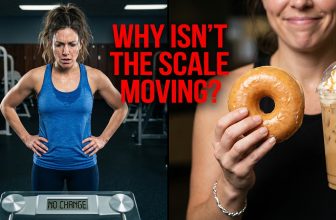
There will be plateau weeks. Sometimes two or three in a row where the scale doesn’t move at all. Your body is often recomposing during these weeks — losing fat while preserving or building muscle — even when the number stays flat. This is not failure. This is biology doing exactly what it’s supposed to do. Trust the system. Stay in the work.
Beginner Weight Loss Myths That Are Quietly Wrecking Your Progress
Does cutting carbs make weight loss faster?
Not necessarily. Carbohydrate restriction reduces water weight quickly — which feels like rapid fat loss but isn’t. Sustainable fat loss comes from a caloric deficit, not from eliminating a macronutrient group. Many people lose weight successfully while eating carbohydrates consistently. What matters is the overall energy balance, the quality of food choices, and the behavioral consistency holding it all together.
Is exercising every morning better for fat loss?
Timing matters far less than consistency. The best workout time is the one you’ll actually do, repeatedly, without resentment. For most beginners, morning exercise increases consistency because it front-loads the habit before the day’s demands erode motivation — but this is a behavioral advantage, not a metabolic one.
Do fat-loss supplements accelerate beginner results?
In most cases, no. The supplement industry generates over $35 billion annually on the promise of acceleration. For beginners, the behavioral foundation — sleep, hydration, protein, movement, habit consistency — will always produce more meaningful and durable results than any supplement stack. If the basics aren’t in place, supplements are expensive noise.
Why am I not losing weight even though I’m eating healthy?
Usually one of three things: underestimated calorie intake (healthy food still contains calories), overestimated calorie burn (exercise burns less than most people think), or insufficient sleep disrupting the hormonal environment for fat loss. A two-week food logging experiment — just for awareness, not forever — almost always reveals the answer.
Is it normal to gain weight in the first week of a new diet?
Yes, and it’s almost never actual fat gain. Dietary changes often cause temporary water retention, especially if sodium or carbohydrate intake fluctuates. Muscle soreness from new movement causes micro-inflammation that retains fluid. The scale number in week one is the noisiest, least informative data point in the entire journey. Don’t let it make decisions for you.
How do I stay motivated when weight loss stalls?
Stop chasing motivation. It’s unreliable. Instead, return to the system — specifically to your Why Wall and your One Percent Better journal. Reread entries from week one. Look at how far the baseline has shifted. Plateaus are where most people quit and where the people who succeed choose to stay. The exit from a plateau is almost always behavioral, not dietary — more sleep, more steps, more consistency in the habits you’ve already built.
What Comes After the Beginning
Six months from now, if you work this system, you won’t be a beginner anymore. That threshold deserves a map.
The Progression from Beginner to Intermediate
| Phase | Primary Focus | Duration |
|---|---|---|
| Beginner | Behavioral foundation, one habit per week, protein, sleep, liquid calories | Months 1–3 |
| Early Intermediate | Structured walking program, introduction of light resistance training | Months 4–6 |
| Intermediate | Progressive overload, macro awareness, periodized nutrition | Months 7–12 |
| Advanced Beginner | Body recomposition, performance-based goals, maintenance psychology | Year 2+ |
The most common mistake people make after early success is accelerating too fast. They lose 20 lbs, feel incredible, and immediately layer in complexity that the behavioral foundation isn’t yet solid enough to support. The new habits haven’t had time to automate. The identity hasn’t fully hardened. Complexity overwhelms the system, progress stalls, and the whole architecture starts to crack.
Stay in the beginner phase longer than it feels comfortable. Let the habits become unconscious. Let the identity settle. Then add the sophistication.