Most adults don’t quit training because they stop caring.
They quit because their body starts pushing back.
A shoulder that used to move freely now feels guarded.
Hips tighten after long days of sitting.
Your back needs a few minutes just to feel like itself again.
None of this happens overnight. It creeps in quietly. And if you’ve felt it, you already know the deeper fear underneath it isn’t weakness—it’s loss of capability.
This guide isn’t about reversing age. It’s about earning trust back from your body.
Not by doing less.
Not by babying joints.
But by training in a way that aligns with how adult bodies actually adapt, recover, and grow stronger.
This is a mobility and strength training system built for real adults—people who want muscle, resilience, and freedom of movement without paying for it later.
Why Adults Need a Different Training Strategy Than 20-Somethings
The Real Problem Isn’t Muscle Loss—It’s How You Move
Muscle loss gets all the attention, but it’s rarely the first thing to go. What fades earlier—and faster—is movement quality.
Years of sitting, stress, and repetitive patterns quietly teach the nervous system to avoid certain positions. Joints lose confidence. Muscles tighten not because they’re short, but because they’re trying to protect something unstable.
That’s why so many adults feel “strong but stiff” or “fit but fragile.”
Strength without mobility eventually hits a ceiling.
Mobility without strength never sticks.
The body doesn’t want extremes. It wants integration.
What Mobility and Strength Training Really Means (And What It Doesn’t)
Mobility Is Control, Not Stretching
Flexibility is passive. Someone pushes, gravity pulls, and a joint moves.
Mobility is different. Mobility is ownership.
It’s your ability to move a joint through its full usable range and remain calm, stable, and strong there. When you lose that control, the nervous system tightens the brakes. That’s what stiffness often is—a safety mechanism, not a flaw.
Strength Isn’t Just Load—It’s Trust Under Tension
For adults, strength isn’t about chasing numbers. It’s about:
Stability where you used to feel vulnerable
Force without irritation
Confidence under load
When mobility and strength are trained together, joints stop feeling like liabilities and start behaving like assets.
Core Principles of a Smart Adult Mobility and Strength Routine
Build Strength Through Range, Not Around It
Most adults don’t need heavier weights. They need better positions.
Strength through range means slowing down, controlling depth, and spending time where the body usually rushes past. Pauses. Long eccentrics. Calm breathing.
This isn’t softer training. It’s more honest.
Movements like:
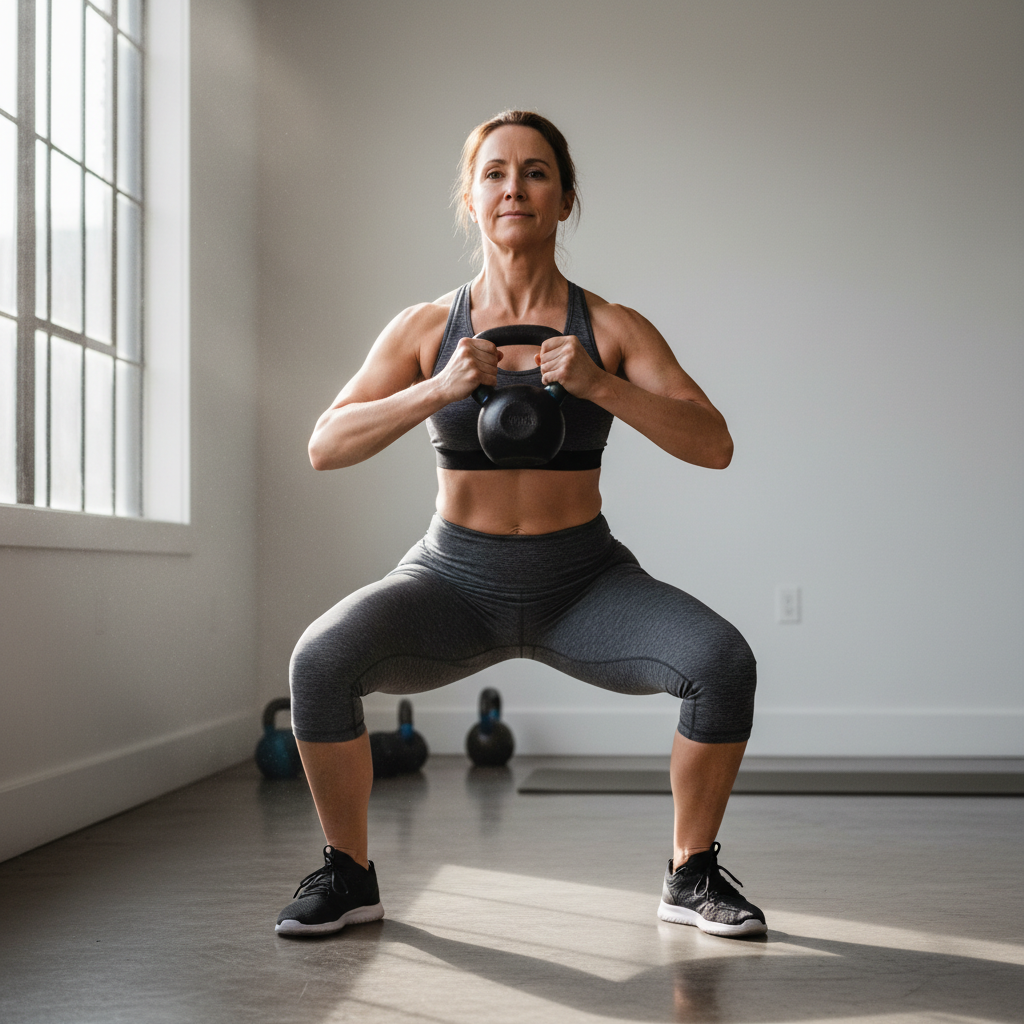
Deep goblet squats held for a breath
Split squats that actually open the hips
Presses that allow the shoulders to move naturally
These teach the body something important: this position is safe.
End-Range Stability Is Where Resilience Lives
Injuries don’t happen in the middle. They happen at edges.
When a joint reaches its limit without strength to support it, that’s when things go wrong. End-range stability—through isometrics and slow transitions—is what turns mobility from temporary relief into permanent capacity.
It’s not flashy. It’s foundational.
Mobility Comes First, Strength Makes It Permanent
Mobility prepares the nervous system. Strength convinces it to stay.
A smart session flows like this:
Open the joints you’ll load
Strengthen through those ranges
Add minimal accessories to balance things out
Anything else is borrowed progress.
A Weekly Mobility and Strength Training Structure That Adults Can Sustain
The 3-Day Full-Body Framework
Three days isn’t a compromise. It’s a strategy.
Day One: Lower Body and Spine
Hip mobility that restores depth
Squats or split squats with control
Hip hinges that load without strain
Core work that resists movement, not creates it
Day Two: Upper Body and Shoulders
Thoracic spine mobility
Scapular control and awareness
Pressing and pulling that respects shoulder mechanics
End-range stability for the joints that usually complain
Day Three: Integrated, Athletic Movement
Rotation and lateral patterns
Carries that reconnect the body as one unit
Single-leg work that challenges balance and coordination
This structure respects recovery, keeps the nervous system fresh, and allows consistency to win over intensity.
The Quiet Power of Daily Micro-Mobility
Five minutes. Sometimes less.
Daily micro-mobility isn’t training—it’s maintenance. It keeps joints hydrated, reminds the nervous system of available ranges, and prevents stiffness from becoming identity.
Focus on:
Hips that sit all day
Thoracic spine that barely rotates
Ankles that forget how to bend
Shoulders that carry stress
Think of it like brushing your teeth. You don’t do it for results—you do it so problems don’t appear.
Measuring Progress Without Chasing Your Ego
Mobility Wins That Actually Matter
Progress isn’t louder weights. It’s quieter signals.
Can you sit deeper without guarding?
Reach overhead without hesitation?
Rotate without bracing?
These aren’t small wins. They’re signs your body is trusting you again.
Strength That Shows Up Outside the Gym
The best strength gains don’t announce themselves during workouts. They show up later.
Less stiffness in the morning.
Fewer random tweaks.
More confidence picking things up, moving fast, or trying something new.
That’s strength doing its real job.
The Mistakes Even Smart Adults Make
Stretching What’s Actually Unstable
If something always feels tight, it’s often under-supported. Stretching alone just removes the alarm without fixing the issue.
Avoiding Challenging Positions Forever
Pain-free doesn’t mean challenge-free. Capacity shrinks when avoided long enough.
Training Like Recovery Is Optional
Recovery isn’t weakness. It’s part of adaptation—especially for adults.
What Changes When Mobility and Strength Work Together
People often expect aesthetic changes first. What surprises them is everything else.
Posture shifts without effort.
Movement feels lighter.
Confidence creeps back in—not bravado, but quiet certainty.
This isn’t about staying young. It’s about remaining capable.
Questions People Ask Themselves (But Rarely Out Loud)
“Is mobility and strength training actually good after 40?”
It’s not just good—it’s essential. Joint health and recovery capacity become the limiting factors, not motivation.
“How often should adults really train?”
Most thrive on two to four focused sessions per week, supported by short daily movement.
“Can I still build muscle this way?”
Yes. Often more usable muscle, with fewer setbacks.
“Do I need fancy equipment?”
No. Dumbbells, kettlebells, bands, and bodyweight go a long way when used well.
Related Reading and Internal Topics
Mobility vs flexibility explained
Strength training for joint health
Recovery strategies for adults
Low-impact strength programs
Posture and movement mechanics
Products / Tools / Resources
Adjustable Dumbbells or Kettlebells – Versatile tools for controlled strength through range
Resistance Bands – Ideal for joint prep, stability work, and end-range training
Foam Roller or Massage Ball – Useful for restoring tissue quality before mobility work
Yoga Mat or Training Mat – Makes daily micro-mobility easier to maintain
Mobility-Focused Training Programs – Look for systems that integrate strength, not isolate stretching
Movement Education Books or Courses – Resources that teach why movements work, not just how
These tools don’t replace consistency—but they make consistency easier to sustain.